


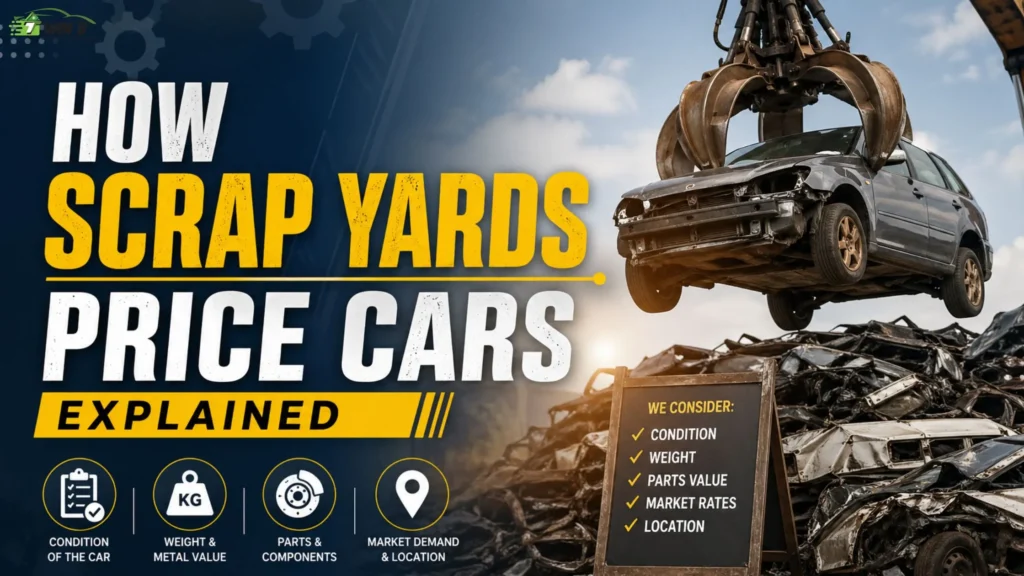
If you’ve ever tried to sell an old or damaged vehicle, you’ve probably wondered how scrap yards price cars and why offers can vary so much. Many car owners assume that junk vehicles have little to no value, but in reality, scrap yards follow a calculated process to determine pricing.
Understanding how this system works can help you make smarter decisions, avoid undervaluation, and ultimately get the best possible return for your vehicle. Whether your car is completely totaled or simply no longer roadworthy, knowing the factors behind pricing gives you an advantage.
Let’s break it down in a clear and practical way.
The Real Logic Behind Scrap Car Pricing
Scrap yards don’t guess prices — they calculate them. The foundation of how scrap yards price cars starts with the vehicle’s material and resale potential.
Every car contains valuable components such as steel, aluminum, copper, and reusable parts. These materials have market value, and scrap yards assess how much of your vehicle can be reused, resold, or recycled.
At the same time, they consider operational costs like dismantling, storage, and transportation. This balance between value and cost is what shapes the final offer you receive.
If you want a realistic idea of your car’s worth, requesting a quick quote from a professional buyer early in the process can help you understand where you stand.
Read More: Junk Car Market Trends in Florida (2026)
Weight Plays a Bigger Role Than You Think
One of the biggest factors in scrap pricing is vehicle weight. Heavier vehicles generally contain more metal, which increases their base scrap value.
Larger cars, SUVs, and trucks often receive better offers compared to smaller vehicles because they yield more recyclable material. Scrap yards multiply the weight of the car by current scrap metal rates to estimate a baseline price.
However, weight alone doesn’t determine everything. Two vehicles of similar size can receive very different offers depending on condition and usable parts.
That’s why it’s always smart to get a personalized evaluation instead of relying on assumptions.
Metal Market Rates Constantly Change
Another important factor in how scrap yards price cars is the fluctuating value of scrap metal. Prices for steel, aluminum, and copper change based on global demand and supply.
When metal prices are high, scrap yards can offer better payouts. When prices drop, offers may decrease accordingly.
This means timing can influence how much you receive for your vehicle. If you’re not in a hurry, checking current scrap trends or requesting multiple quotes can help you make a better decision.
Even a small shift in market rates can impact your final offer.
Condition Still Matters — Even for Scrap Cars
Many sellers assume that condition doesn’t matter when scrapping a car, but that’s not entirely true. While the vehicle may no longer run, its components still hold value.
Engines, transmissions, batteries, catalytic converters, and electronics can significantly increase the price if they are reusable. Scrap yards often remove and resell these parts before recycling the remaining metal.
This is why two cars with similar weight can have completely different pricing outcomes.
If your car has working components, mentioning them during evaluation can help maximize your offer. A quick inspection or honest description can make a noticeable difference.
Demand for Parts Influences Pricing
Scrap yards don’t just think about metal — they also consider parts demand. If your car model has parts that are in high demand, it can increase the overall value.
Popular vehicles often have higher resale value in parts because they are easier to sell in the second-hand market. On the other hand, rare or outdated models may rely more on scrap metal value alone.
Understanding this aspect of pricing helps explain why similar vehicles can receive different offers.
If you’re unsure, getting a professional quote can reveal whether your car has strong parts demand or is valued mainly for scrap.
Location and Towing Costs Are Included
Another hidden factor in how scrap yards price cars is logistics. Transportation plays a role in the final offer, especially if the vehicle needs to be picked up.
Many professional buyers include free towing in their service, which adds convenience but is also factored into pricing calculations.
Choosing a buyer that offers transparent pricing with included towing ensures you don’t lose money through hidden deductions.
If your vehicle isn’t drivable, working with a service that provides pickup can save both time and additional expenses.
Why Offers Vary Between Buyers
It’s common to receive different quotes from different scrap yards. This happens because each buyer operates with unique business models, resale networks, and processing costs.
Some buyers focus more on parts resale, while others prioritize bulk metal recycling. Their internal strategies influence how they calculate value.
For sellers, this creates an opportunity. Comparing multiple offers allows you to identify the most competitive price without rushing into a decision.
If your goal is to get the best deal, never rely on a single quote.
Make Smarter Decisions Before You Sell
Understanding how scrap yards price cars gives you control over the selling process. Instead of accepting offers blindly, you can evaluate whether the price reflects your vehicle’s true value.
Take a few simple steps before finalizing your sale:
- Get at least one or two quotes
- Provide accurate vehicle details
- Highlight any working parts
- Choose a buyer with clear, upfront pricing
These small actions can significantly improve your final payout without adding complexity.
Final Thoughts: Turn Scrap Into Smart Value
Scrapping a car isn’t just about getting rid of it — it’s about making sure you’re not leaving money behind. Once you understand the factors behind how scrap yards price cars, the process becomes far more transparent and rewarding.
From metal weight and market trends to parts demand and condition, every detail contributes to your vehicle’s final value. The more informed you are, the better decisions you’ll make.
If you’re ready to see what your car is truly worth, don’t rely on guesswork. Get a quick evaluation, compare offers, and move forward with confidence. A simple step today can help you turn your scrap vehicle into real, immediate cash — without unnecessary delays or confusion.