


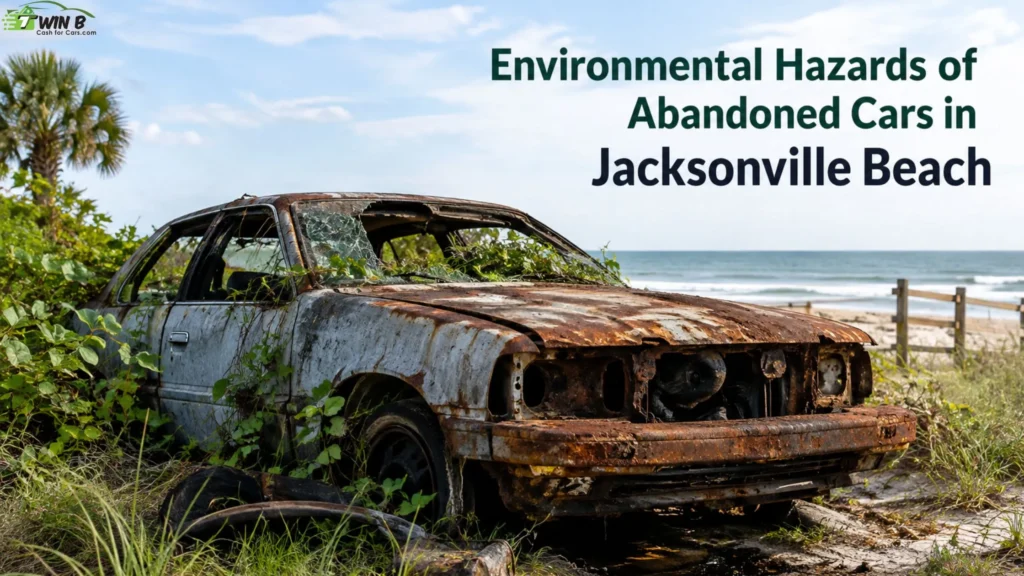
An abandoned car isn’t just an eyesore. Left to sit, it can leak fluids into the soil and stormwater, hold standing water that breeds mosquitoes, and break down into materials that need careful handling. In a coastal community like Jacksonville Beach, those risks matter more.
Here’s what’s actually inside a neglected vehicle, why it’s a problem, and what you can do about it.
What's inside an old car
Most people think of a car as metal and glass. It’s also a container of materials that shouldn’t end up in the ground:
- Engine oil and transmission fluid. Can leak as seals and gaskets age.
- Coolant. Antifreeze is toxic and sweet-tasting, which makes it dangerous to pets and wildlife.
- Brake and power steering fluid. Both can seep out over time.
- Fuel. Gasoline and diesel can leak or evaporate.
- The battery. Contains acid and heavy metals such as lead.
- Air conditioning refrigerant. Needs proper recovery, not release.
- Tires. They hold water, leach compounds as they degrade, and are a fire concern in large piles.
A car sitting quietly in a yard can look harmless while any of these slowly work their way out.
Why the coast raises the stakes
Jacksonville Beach sits between the Atlantic Ocean and the Intracoastal Waterway, and Florida’s water table is high. That means:
Stormwater carries things far. Rain washes fluids off pavement and soil into storm drains, which lead to waterways.
Flooding spreads contamination. Heavy storms can move leaking materials well beyond the original spot.
Salt air speeds decay. Corrosion opens seams and seals faster, so leaks can start sooner.
Water collects in dead cars. Standing water in trunks, tires, and interiors is ideal mosquito habitat.
Other problems abandoned cars cause
Beyond the environment, there are practical issues:
- Pests such as rodents, insects, and snakes can move in.
- A car in poor condition can attract dumping.
- Broken glass and sharp metal are hazardous, especially for children.
- Fire risk increases with fuel, old wiring, and dry vegetation.
- Property values and neighbor relations can suffer.
- HOA and code enforcement violations can bring fines or notices.
What responsible handling looks like
When a vehicle reaches the end of its life, the safe route is to have fluids drained, the battery removed, and usable parts and metals recovered. Reputable operators handle these materials according to the rules that apply to them. That’s why selling or recycling an old car is more useful than leaving it, or worse, dumping parts.
Never drain fluids onto the ground or into a storm drain yourself. If you need the car gone, the safest approach is to hand it to a buyer who handles it properly.
If the abandoned car is yours
You have simple options:
- Request a quote. Even a neglected car often has scrap or parts value.
- Ask about free towing. Many buyers include it.
- Prepare the paperwork. Have your ID and title ready if you have them.
Florida ownership and title requirements can change, so check the Florida Highway Safety and Motor Vehicles (FLHSMV) website, and confirm what the buyer needs.
If it's someone else's car
If you’re dealing with a vehicle you don’t own, such as one left on a neighbor’s property or a street, don’t try to move or dismantle it. Contact the appropriate local authority, such as code enforcement or the police non-emergency line, or your HOA or property manager if it’s on managed property. Processes and rules vary, so ask what applies in your situation.
Small steps that help
- Don’t let a non-running car sit for years.
- Check for leaks and tell the buyer if you find any.
- Keep tires from collecting water.
- Remove the toll transponder and personal items before pickup.
- Keep your receipt after the car leaves.
A quick word on getting the timing right
The longer a dead car sits, the more it deteriorates, the less it’s typically worth, and the more likely it is to leak. Acting sooner is usually better for both the environment and your wallet.
Learn more about your options on our pages for junk car removal in Jacksonville Beach, cash for cars in Jacksonville Beach, and cash for damaged cars in Jacksonville Beach. We also serve Neptune Beach and Atlantic Beach.
Frequently asked questions
What types of vehicles can I sell in Jacksonville Beach?
Depending on the buyer, eligible vehicles may include old, damaged, junk, non-running, or unwanted cars, trucks, SUVs, and other vehicles.
Do you offer pickup in Jacksonville Beach?
Pickup availability depends on the business’s actual service area and schedule. Confirm that Jacksonville Beach is covered before booking.
What affects the value of my vehicle in Jacksonville Beach?
Year, make, model, mileage, condition, title status, parts, demand, and pickup logistics can affect a vehicle’s value.
What documents do I need to sell my car in Jacksonville Beach?
Requirements can vary by vehicle and situation. Confirm the current Florida ownership/title requirements and the buyer’s paperwork requirements before pickup.
Have a car that needs to go? Get a Free Car Valuation, Request a Quote, or Call Now