


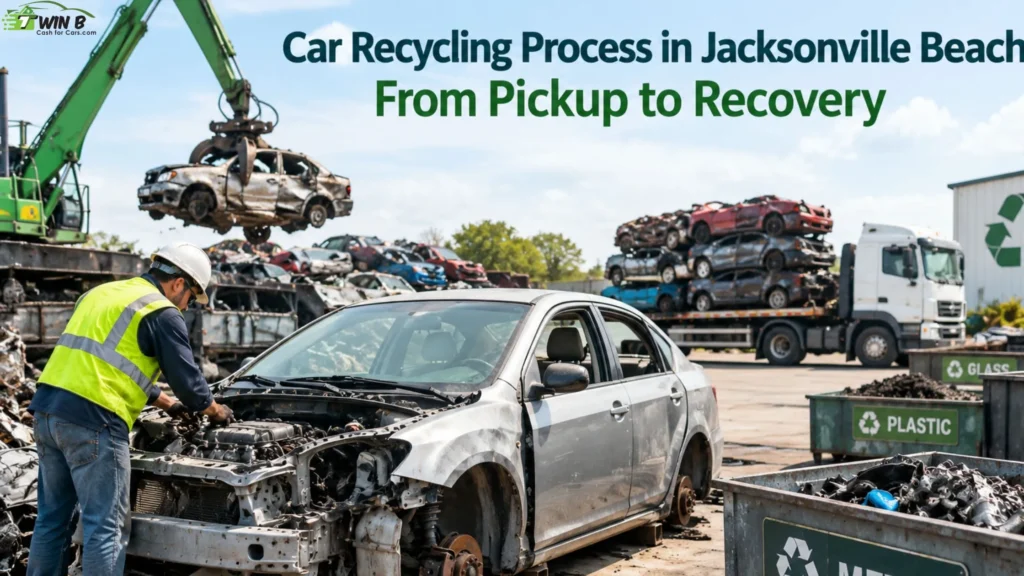
The typical car recycling process runs in five stages: collection, depollution, dismantling, parts recovery, and material processing. Each stage keeps hazardous fluids out of the environment and returns as much metal and as many usable parts as possible to the supply chain.
If you’ve handed over an old car in Jacksonville Beach, or you’re about to, here’s what each stage means and what it means for you.
Stage 1: Collection
Everything starts with pickup. A tow truck collects the vehicle from your home, condo lot, or wherever it’s parked. Around the beaches, that might mean a tight garage or a narrow street, so the driver needs accurate details about access.
What it means for you: This is where the paperwork changes hands. Keep your receipt or bill of sale as proof of the date the vehicle left your possession.
Stage 2: Depollution
Before a car is cut apart or crushed, its hazardous materials are removed. This is the most important environmental stage. Depending on the vehicle and the facility, that typically covers:
- Engine oil, transmission fluid, and power steering fluid
- Coolant and brake fluid
- Remaining fuel
- Air conditioning refrigerant
- The battery
- Other components flagged for careful handling
Handling rules apply to operators, and good ones follow them closely. Jacksonville Beach sits between the Atlantic and the Intracoastal Waterway, so keeping fluids out of soil and stormwater is a genuine local concern.
What it means for you: If your car has been leaking, tell the buyer. It doesn’t change whether they’ll take it, but it helps them plan.
Stage 3: Dismantling
Once the car is safe to handle, workers begin taking it apart. They remove parts that can be reused or need separate treatment, such as:
- Wheels and tires
- Catalytic converters and other emission components
- Engines and transmissions
- Electronics and wiring harnesses
- Panels, glass, and interior parts
What it means for you: A car that arrives complete gives the dismantler more to work with, which is why completeness affects your offer.
Stage 4: Parts recovery
Some of what’s removed goes back on the road. Used alternators, doors, engines, and other components can be resold, and others are sent for remanufacturing. Reuse keeps working parts in circulation and is often cheaper than buying new ones.
What it means for you: Popular models with in-demand parts can be worth more than their scrap weight. That’s one reason a running car tends to bring more than a bare shell.
Stage 5: Material processing
With the reusable parts and hazardous items taken out, the remaining body is typically crushed, then shredded into small fragments. Magnets pull out steel and iron, which make up most of a car’s weight. Other processes separate aluminum, copper, and other non-ferrous metals. What’s left, such as some plastics, foam, and fabric, is handled separately, and how much of it is recovered varies by facility.
The recovered metals go to mills and manufacturers who melt them down and use them in new products. Steel and aluminum can be recycled many times.
What it means for you: This is the part that gives an old car a second life instead of an afterlife in a yard.
Why this matters near the coast
Salt air, humidity, and storm season are tough on cars in Jacksonville Beach. Rust sets in faster, and flooding can leave a vehicle unusable. An old car left sitting can leak fluids, collect standing water, and become a nuisance. Recycling it properly removes those problems.
What you can do to help the process
- Tell the buyer about leaks, damage, and missing parts.
- Remove personal items and any toll transponder.
- Have your ID and title ready if you have them.
- Keep your receipt and any messages confirming the sale.
Florida ownership and title requirements can change, so check the Florida Highway Safety and Motor Vehicles (FLHSMV) website and confirm what your buyer needs. Keep insurance active until the car has actually left.
Ask questions
Good buyers can answer plainly:
- Where does the car go after pickup?
- How are fluids handled?
- Are parts reused or recycled?
If a company makes environmental claims, ask for specifics. Processes vary.
Learn more about your options on our pages for cash for cars in Jacksonville Beach, junk car removal in Jacksonville Beach, and cash for damaged cars in Jacksonville Beach. We also serve Neptune Beach and Atlantic Beach.
Frequently asked questions
What types of vehicles can I sell in Jacksonville Beach?
Depending on the buyer, eligible vehicles may include old, damaged, junk, non-running, or unwanted cars, trucks, SUVs, and other vehicles.
Do you offer pickup in Jacksonville Beach?
Pickup availability depends on the business’s actual service area and schedule. Confirm that Jacksonville Beach is covered before booking.
What affects the value of my vehicle in Jacksonville Beach?
Year, make, model, mileage, condition, title status, parts, demand, and pickup logistics can affect a vehicle’s value.
What documents do I need to sell my car in Jacksonville Beach?
Requirements can vary by vehicle and situation. Confirm the current Florida ownership/title requirements and the buyer’s paperwork requirements before pickup.
Have an old car to recycle? Get a Free Car Valuation, Request a Quote, or Call Now.