

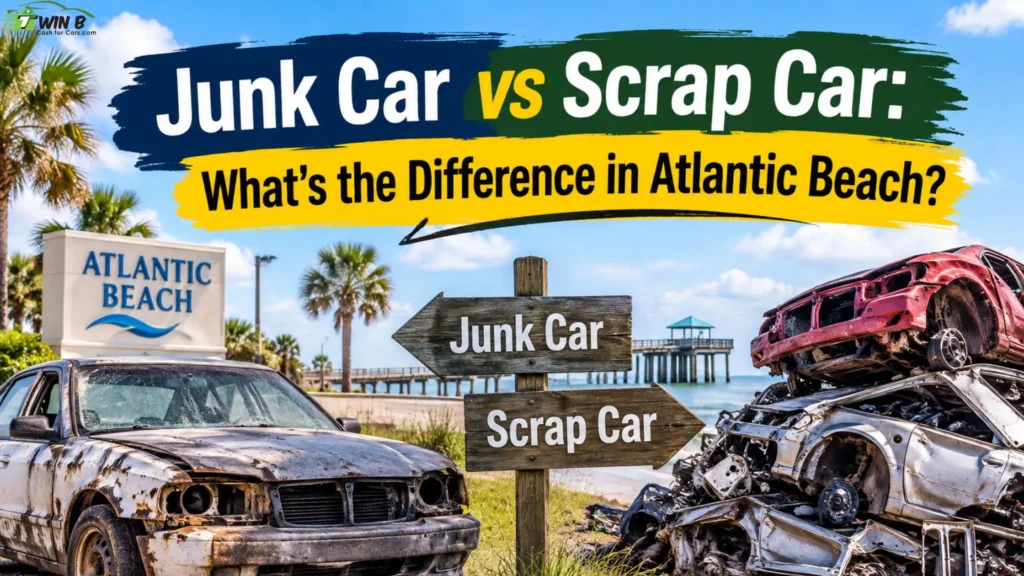
A junk car is one that’s no longer worth fixing, while a scrap car is one whose main value is its metal and materials. In practice, the terms overlap, and buyers in Atlantic Beach often use them interchangeably. What matters is how the car’s condition affects the offer.
If you’re wondering which label applies to your car, and whether it matters, here’s the plain-English version.
What is a junk car?
“Junk” describes a car’s condition. It’s a vehicle that costs more to repair than it’s worth, or that’s simply too old, damaged, or unreliable to keep on the road. Junk cars might:
- Have a blown engine or failed transmission
- Be damaged in an accident or flood
- Fail to start or drive
- Be missing major components
- Have been sitting unused for years
A junk car may still have resale value in parts. The label is more about the car’s usefulness as a vehicle than its dollar value.
What is a scrap car?
“Scrap” describes a car’s material value. A scrap car is one that’s headed for recycling, where the buyer’s interest is mostly in the steel, aluminum, copper, and other metals it contains. Value is generally tied to:
- Weight
- Current scrap metal prices
- Which components remain
- Whether reusable parts can be pulled
Where they overlap
Most junk cars end up as scrap eventually, and many scrap cars are junk by condition. So a buyer who says “we buy junk cars” and one who says “cash for scrap cars” are usually talking about the same kind of vehicle. The words often reflect marketing more than a hard line.
A helpful way to think about it: junk describes the car’s state, scrap describes where it’s going.
Does the difference change your offer?
Not the label itself, but the things behind it do. A buyer assessing your car considers:
Factor | Why it matters |
Year, make, and model | Parts demand varies |
Condition | A complete car is usually worth more |
Weight | Heavier vehicles carry more metal |
Scrap prices | These move over time |
Title status | Affects paperwork and process |
Pickup logistics | Access and distance add cost |
A running, complete car in decent shape might be treated as a used vehicle. A stripped shell is more likely priced as scrap.
Junk, scrap, and salvage
There’s a third term that people confuse with the first two. Salvage usually refers to a vehicle’s title or insurance status, such as when an insurer declares a car a total loss. It’s a different concept from junk or scrap, and Florida has its own rules about titles in these cases. If your car has been declared a total loss, check the Florida Highway Safety and Motor Vehicles (FLHSMV) website and talk to your insurer before selling.
Atlantic Beach specifics
Living so close to the ocean affects cars. Salt air speeds up rust and corrosion, so a car that sits outside can go from “needs work” to “junk” faster than it would inland. Storm flooding is another concern, and water-damaged vehicles are common candidates for scrap or junk sales.
Atlantic Beach is also near Naval Station Mayport, so some owners are military families who need to sell a vehicle quickly when they relocate. If you’re on a timeline, tell the buyer, since timing can affect which options fit.
What to do with your car
- Describe it honestly. Whether you call it junk or scrap, the buyer wants the facts: year, make, model, mileage, condition, and what’s missing.
- Take photos. Show all sides, the interior, and the odometer.
- Request a quote. Ask what it’s based on, whether it’s firm, and whether towing is free.
- Prepare the paperwork. Have your ID and title ready if you have them. Florida ownership and title rules can change, so verify current requirements with FLHSMV and ask the buyer what they need.
- Get a receipt. Keep it, and wait to cancel insurance until the car has left.
Red flags
- Payment requested upfront
- A price that changes at your door
- No business name or clear contact
- No paperwork
Explore more on our pages for cash for cars in Atlantic Beach, junk car removal in Atlantic Beach, and cash for damaged cars in Atlantic Beach. We also serve Neptune Beach and Jacksonville Beach.
Frequently asked questions
What types of vehicles can I sell in Atlantic Beach?
Depending on the buyer, eligible vehicles may include old, damaged, junk, non-running, or unwanted cars, trucks, SUVs, and other vehicles.
Do you offer pickup in Atlantic Beach?
Pickup availability depends on the business’s actual service area and schedule. Confirm that Atlantic Beach is covered before booking.
What affects the value of my vehicle in Atlantic Beach?
Year, make, model, mileage, condition, title status, parts, demand, and pickup logistics can affect a vehicle’s value.
What documents do I need to sell my car in Atlantic Beach?
Requirements can vary by vehicle and situation. Confirm the current Florida ownership/title requirements and the buyer’s paperwork requirements before pickup.
Not sure what to call your car? Get a Free Car Valuation, Request a Quote, or Call Now.