


Cancel your car insurance only after the sale is finished and you’ve handled the paperwork and the plate. In Florida, that generally means filing your Notice of Sale and either transferring or surrendering the plate first, then contacting your insurer. Canceling too early can trigger state letters or a license suspension.
This is general information, not insurance or legal advice. Confirm details with your insurer, FLHSMV, and your tax collector.
What’s the Right Order of Steps?
Follow these four steps in order.
Step 1: Finish the sale.
Get paid, sign over the title, and make sure the car has left your property. Keep your insurance active until it has. If the buyer’s tow truck hasn’t come yet, you’re still the owner.
Step 2: Keep your records and file the Notice of Sale.
Save copies of the signed title, any bill of sale, and your payment record. Then file Notice of Sale form HSMV 82050. FLHSMV says Florida law requires sellers to file it, and that doing so removes your registration from the vehicle and helps protect you from civil liability for what happens with the car afterward.
Step 3: Transfer or surrender the plate.
In Florida, the plate stays with you. If you’re getting another vehicle, you may be able to transfer it. If not, surrender the plate and registration, and get proof that the registration was canceled. Our guide on what to do with your license plate after selling a car covers the details.
Step 4: Contact your insurer.
Once the steps above are done, call your insurer to cancel or change the policy. FLHSMV’s guidance says to surrender the plate first and make sure insurance is canceled afterward, to avoid a driver license suspension.
Four-step checklist (graphic copy):
- Finish the sale
- Keep records, file Notice of Sale
- Transfer or surrender the plate
- Contact your insurer
Why Does the Order Matter?
Florida ties registration to insurance. FLHSMV says a vehicle must be insured in Florida to keep its Florida registration, with limited exceptions such as certain military members stationed elsewhere. Insurers report policy cancellations to the state electronically. If your insurer reports that you canceled and the car still has a valid registration, the state can send a letter asking for proof of coverage.
For a vehicle you no longer own, and don’t plan to move the plate to another one, FLHSMV says to surrender the tag at a driver license or motor vehicle service center or a tax collector’s office. Its procedures also say that an owner who plans to cancel insurance on a vehicle with a valid plate and decal should surrender the plate first. Skipping that order is what causes trouble.
What Happens If I Cancel Too Early?
If the sale falls through, the buyer is late, or the car is still in your driveway, you could be left with an uninsured vehicle that’s still registered to you. That can mean a coverage gap, a state letter, or other problems. Wait until the car is gone and the paperwork is done.
Can I Move My Insurance to a New Car?
Many insurers let you swap a vehicle on an existing policy instead of canceling it. Ask your insurer how and when. If you’re replacing the car, the plate transfer and the insurance swap often happen around the same time, so ask the insurer and the tax collector how to sequence them.
Do I Need to Tell the State I Sold the Car?
Yes. File the Notice of Sale (HSMV 82050) with a motor vehicle service center. It’s a separate step from telling your insurer. Telling your insurer does not notify the state, and filing with the state doesn’t cancel your policy.
What Should I Ask My Insurer?
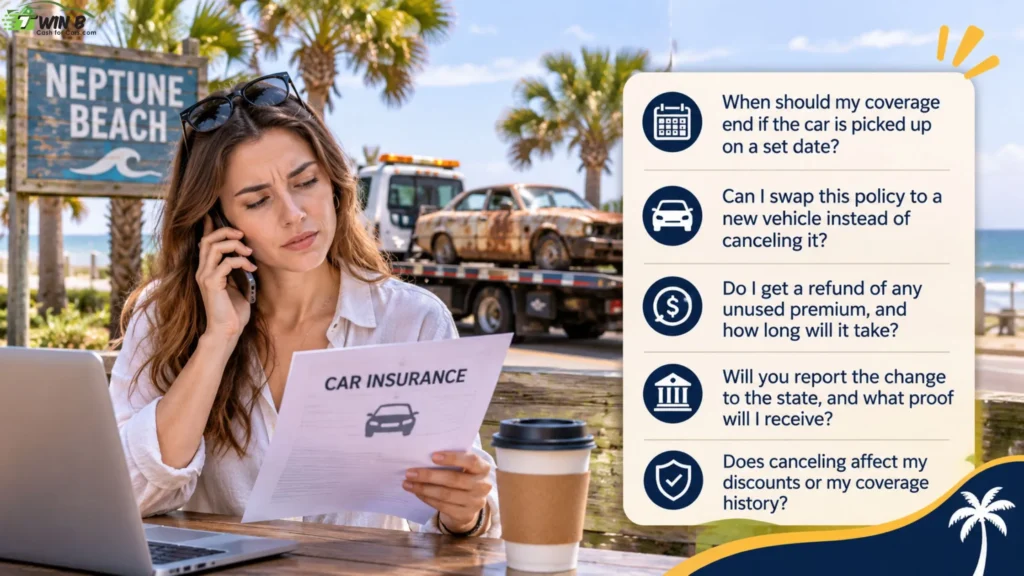
- When should my coverage end if the car is picked up on a set date?
- Can I swap this policy to a new vehicle instead of canceling it?
- Do I get a refund of any unused premium, and how long will it take?
- Will you report the change to the state, and what proof will I receive?
- Does canceling affect my discounts or my coverage history?
For a broader list of questions to ask a buyer, see our guide on what to ask before selling your car for cash.
Local Note for Neptune Beach Sellers
Neptune Beach is in Duval County, so the Duval County Tax Collector is your local office for surrendering a plate or filing paperwork. Check their site for hours and locations. State rules are the same wherever you live in Florida.
Where to Go Next
Learn about cash for cars in Neptune Beach, cash for damaged cars in Neptune Beach, or junk car removal in Neptune Beach. Nearby: Jacksonville Beach, Atlantic Beach, and Jacksonville.
Ready to Sell? Get Your Free Quote
Tell us about your car and we’ll explain what we can offer and what paperwork to expect. No price is guaranteed until the car’s condition and documents are confirmed. Get your free quote here.
Frequently Asked Questions
Should I cancel insurance right after selling a car?
Wait until the sale and paperwork are complete, then contact your insurer. Florida has its own insurance and registration rules, so confirm the details.
Can I move my insurance to a new car?
Many insurers let you swap a vehicle on a policy. Ask your insurer how and when.
What happens if I cancel too early?
If the car is still registered or the sale falls through, you could face gaps or other issues. Confirm with your insurer and the state.
Do I need to tell the state I sold the car?
Florida has a process for reporting a vehicle sale. Check current requirements with official sources.