


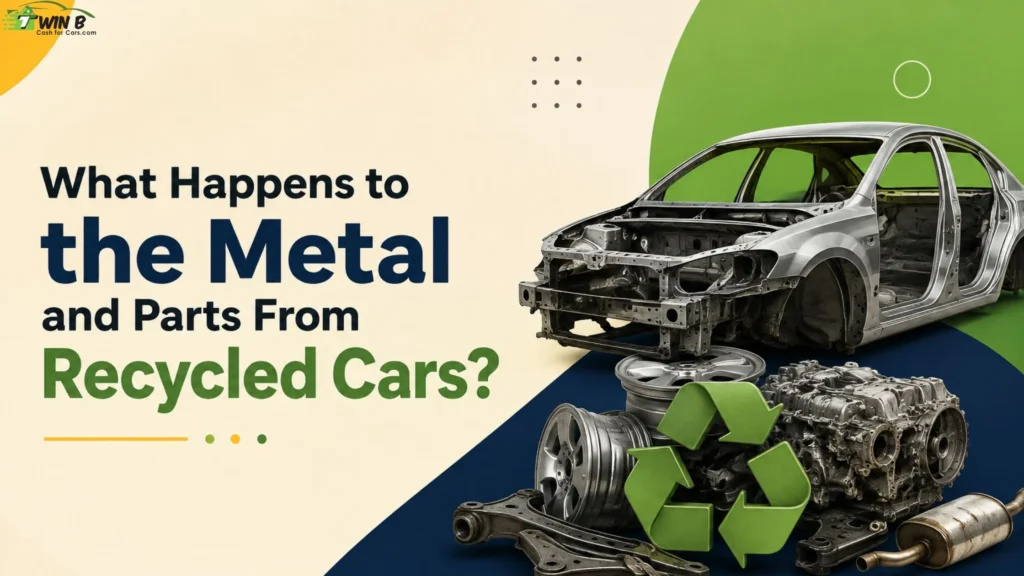
An old vehicle may look like a collection of unwanted parts once it can no longer be driven, but many of its materials can still be useful. Understanding what happens to recycled car parts and metal gives owners a better idea of why responsible vehicle recycling is important.
Instead of treating every end-of-life vehicle as ordinary waste, recycling allows useful materials and components to be recovered.
What Happens First?
The process starts with evaluating the vehicle.
Its condition is considered to determine whether components can be reused or whether the vehicle is primarily suitable for material recovery.
This helps separate useful parts from materials that need further processing.
Reusable Vehicle Components
A vehicle can contain many components that remain useful even when the car itself is no longer roadworthy.
Depending on condition, these can include:
- Wheels
- Mirrors
- Doors
- Seats
- Alternators
- Transmissions
- Electronic components
- Body panels
The exact components that can be reused depend on the vehicle and its condition.
What Happens to the Metal?
Cars contain significant quantities of steel and other metals.
During recycling, materials can be separated and processed so they can potentially be used again.
Steel from vehicle bodies is particularly important because it can be recovered instead of simply being discarded.
This is a major part of vehicle metal recycling.
Why Is Metal Recycling Important?
Recycling existing metals can reduce the need for new raw materials.
It can also give useful material another purpose after the original vehicle has reached the end of its useful life.
For this reason, recycling plays an important role in reducing unnecessary automotive waste.
What Happens to Fluids?
Vehicles contain fluids that should be handled carefully.
Engine oil, coolant, transmission fluid, brake fluid, and other liquids should not be released into the environment.
Appropriate processing helps reduce the risk of soil and water contamination.
What About Batteries?
Automotive batteries contain materials that can be recovered through specialized recycling processes.
Instead of leaving an old battery in an abandoned vehicle, proper vehicle processing allows these materials to be handled through appropriate channels.
Tires Can Also Be Processed
Tires are another component that requires responsible disposal.
Depending on local recycling systems and their condition, old tires may be reused, processed, or directed toward appropriate waste-management channels.
This reduces the amount of automotive material unnecessarily entering landfills.
How Does Recycling Help Vehicle Owners?
For an owner, responsible recycling provides a practical way to remove a vehicle that is no longer useful.
Instead of leaving an old car on private property, you can arrange professional removal and allow its components and materials to be handled appropriately.
Twin B Cash for Cars offers vehicle purchasing and recycling-related services for unwanted vehicles.
What Happens to Usable Parts?
Parts that are still functional may potentially be reused in another vehicle.
This can help extend the useful life of existing components and reduce the need to manufacture every replacement part from new resources.
That is one reason auto parts reuse can be an important part of vehicle recycling.
Conclusion
An end-of-life vehicle is not simply a pile of waste. Its parts, metals, battery, tires, and other materials can potentially be recovered and processed.
Responsible recycling gives owners a way to remove unwanted vehicles while supporting more efficient use of automotive materials.
Have an old vehicle ready for removal? Contact Twin B Cash for Cars to ask about vehicle purchasing, removal, and recycling options.