


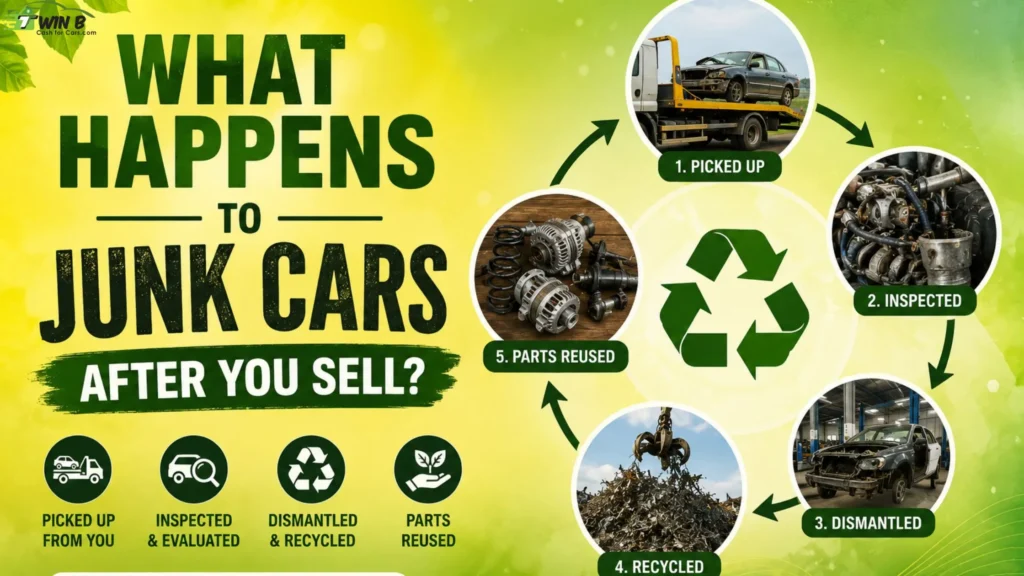
Most people think once they sell their junk car, that’s the end of the story. In reality, that’s just the beginning of a completely different journey.
If you’ve ever wondered what happens to junk cars, the answer is surprisingly interesting. Your old vehicle doesn’t just sit in a scrapyard—it goes through a structured process where every usable part is recovered, recycled, or repurposed.
Step 1: Pickup and Transportation to a Processing Facility
Once you sell your car, it is picked up and transported to a junkyard, recycling center, or auto salvage yard.
At this stage:
- The vehicle is registered into the system
- Basic inspection is performed
- It’s prepared for dismantling
Local companies like Twin B Cash for Cars ensure this step happens quickly and efficiently after purchase.
Step 2: Initial Inspection and Evaluation
Before anything is removed, professionals inspect the vehicle carefully to identify:
- Reusable auto parts
- Valuable components
- Hazardous materials
This step helps determine what can be resold and what needs to be recycled.
Step 3: Removal of Usable Parts
This is where your junk car still proves its worth.
Technicians remove parts that are still in working condition, such as:
- Engine components
- Transmission systems
- Batteries
- Tires and rims
- Electronics
These parts are cleaned, tested, and resold in the second-hand market, helping other vehicle owners save money.
Step 4: Draining Fluids and Safe Disposal
Before crushing or recycling begins, all fluids are carefully removed, including:
- Engine oil
- Coolant
- Brake fluid
- Fuel
This step is crucial for environmental safety, ensuring that harmful substances don’t contaminate the soil or water.
Step 5: Crushing and Metal Recycling
After all usable parts are removed, the remaining car body is crushed and sent for recycling.
Here’s what happens next:
- The metal is shredded into smaller pieces
- Steel, aluminum, and other metals are separated
- Materials are sent to manufacturing industries
These recycled metals are then used to create new vehicles, construction materials, and other products.
Step 6: Reuse in Manufacturing
Your old car doesn’t go to waste—it becomes part of something new.
Recycled materials from junk cars are used in:
- New car production
- Building infrastructure
- Household appliances
- Industrial tools
This is why the junk car industry plays a major role in sustainability.
Why This Process Matters More Than You Think
Understanding what happens to junk cars highlights the importance of proper disposal.
Instead of harming the environment, your car:
- Reduces the need for new raw materials
- Lowers energy consumption
- Supports the recycling economy
It’s not just about selling your car—it’s about contributing to a larger system.
Common Misconceptions About Junk Cars
Let’s clear up a few myths:
- “Junk cars are useless” → False, they are full of reusable materials
- “They just sit in landfills” → Most are fully recycled
- “Only metal matters” → Parts and fluids are equally valuable
Every vehicle has more value than it appears.
What Role Do You Play as a Seller?
By choosing to sell your junk car to a professional buyer, you:
- Ensure proper recycling
- Prevent environmental damage
- Support reuse of auto parts
- Contribute to a sustainable system
Your decision has a real impact beyond just earning cash.
Conclusion: Your Old Car Gets a Second Life
Selling your junk car doesn’t mean it’s the end—it’s a transformation. From usable parts to recycled metal, every component is given a new purpose.
Now that you understand what happens to junk cars, you can feel confident that your vehicle is not wasted—it’s reused in meaningful ways.
If you have an old vehicle sitting idle, now is the perfect time to sell it. Work with a trusted buyer who ensures proper recycling and gives you instant cash.
Turn your junk car into value—for yourself and for the environment—starting today.