


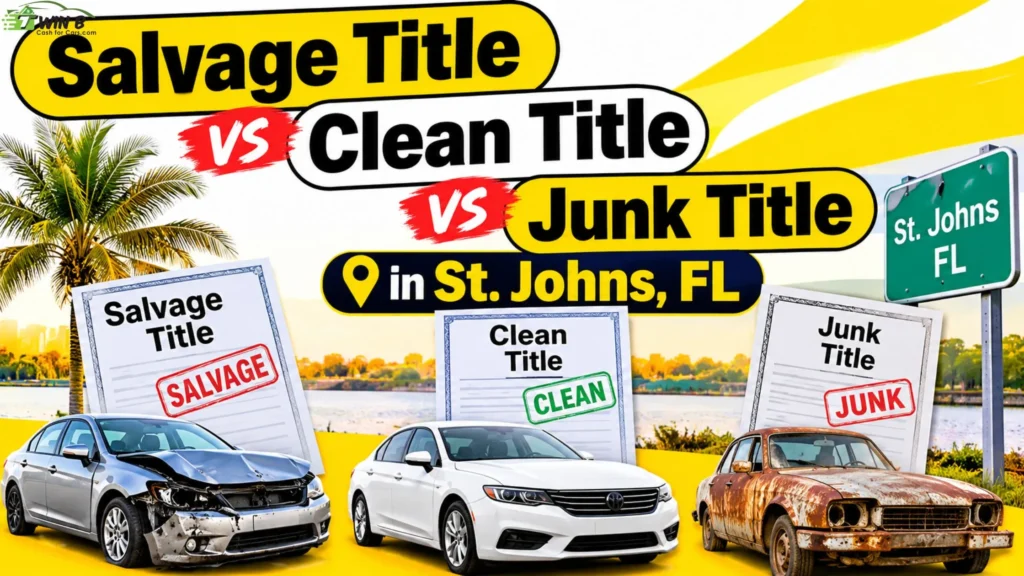
A clean title has no damage brand. In Florida, a salvage title marks a total-loss vehicle that may be rebuilt. A certificate of destruction, often called a “junk” title, means the car is unrebuildable and only good for parts or scrap. All three can be sold, but value and buyers differ.
This is general information, not legal advice. Rules can change and vary by situation, so confirm with FLHSMV and your buyer.
What Are the Differences? A Quick Comparison
Title type | What it means | Effect on value | Who typically buys it |
Clean | No total-loss or similar brand on the title | Usually the highest, based on condition | Private buyers, dealers, junk buyers |
Salvage (Florida: “salvage rebuildable”) | The car was declared a total loss but is considered repairable | Generally lower than a clean-title car | Rebuilders, salvage dealers, parts buyers |
Certificate of destruction (often called “junk”) | Declared unrebuildable and authorizes dismantling or destruction | Typically scrap and parts value only | Licensed salvage dealers, dismantlers, scrap buyers |
Rebuilt | A former salvage car that passed a state inspection | Often lower than a comparable clean-title car | Buyers comfortable with a rebuilt history |
The value and buyer columns reflect general market patterns, not FLHSMV rules or guaranteed prices.
What Is a Clean Title?
A clean title shows no brand for total loss, flood, or rebuilt status. It doesn’t mean a car has never been damaged. Damage that was never reported to an insurer or the state may not appear on the title at all. A clean title usually makes a car easier to sell and to insure.
What Is a Salvage Title in Florida?
According to Florida legislative analyses, Florida’s “salvage title” is the designation for a total-loss vehicle that is considered rebuildable. FLHSMV’s procedures say Florida rebuildable total-loss vehicles from January 1990 onward carry a title branded “Salvage Rebuildable.” FLHSMV also describes an “insurance declared total loss” brand on titles reissued after an insurer’s total-loss payment.
Before a salvage dealer can acquire a total-loss vehicle, the owner or the insurance company must apply for a salvage title or a certificate of destruction. To put a salvage vehicle back on the road, it has to go through a state rebuilt inspection first.
What Is a “Junk Title” in Florida?
“Junk title” isn’t the official name. FLHSMV’s term is a certificate of destruction (COD), which Florida issues in place of a “salvage unrebuildable” title. FLHSMV says vehicles with a certificate of destruction are only good for parts or scrap, and a COD authorizes dismantling or destruction of the vehicle.
“Junk” also describes a process. When you take a car to a salvage yard, FLHSMV says you sign the Transfer of Title by Seller section to the salvage dealer, who then junks (cancels) the title. That’s different from a car whose title was branded after an insurance total loss.
Does a Junk Title Mean the Car Can Never Be Driven Again?
Generally, a car with a certificate of destruction can’t be rebuilt for road use. FLHSMV says such vehicles are good only for parts or scrap. Salvage-titled cars are treated differently: they can be rebuilt and re-titled as “rebuilt” after inspection. Confirm your specific vehicle’s status with FLHSMV before assuming anything.
What Is a Rebuilt Title?
A rebuilt vehicle is built from “salvage” or “junk,” as Florida law defines those terms. FLHSMV says the title is stamped in a conspicuous place to show it’s rebuilt and may have previously been declared a total loss. Rebuilt applications go to an FLHSMV regional office or an approved private inspection program.
Can I Sell a Car With a Salvage or Junk Title?
Yes. Many buyers purchase salvage-titled and certificate-of-destruction vehicles, though offers may differ from a clean-title car. Be accurate about the title type, since it shapes who can buy the car and what they can do with it. Don’t hide a brand. It affects value, and concealing it can create legal and financial problems.
What Paperwork Comes With Each Type?
In every case, the title has to be transferred. FLHSMV says a legal sale requires the title to be signed over, and if a paper title is lost, apply for a duplicate first. See our guide on getting a duplicate title and our look at selling a car without a title. Then file the Notice of Sale (HSMV 82050) and handle the plate, as covered in our Notice of Sale guide.
If the car was declared a total loss by your insurer, the rules on who can dispose of it change. Read our guide on total loss payouts vs selling to a junk car buyer.
Where to Go Next
Learn about cash for cars in St. Johns, cash for damaged cars in St. Johns, or junk car removal in St. Johns. Nearby: Fruit Cove, St. Augustine, and Nocatee.
Tell Us Your Title Type and Get a Quote
Not sure what your title says? Send us what you have, including the title type if you know it, and we’ll explain what we can offer and what we’d need. No price is guaranteed until the car’s condition and documents are confirmed. Request your quote here.
Frequently Asked Questions
What is a salvage title?
It is a title brand generally used when a vehicle has been declared a total loss. Exact rules are set by each state, so check current Florida guidance.
What is the difference between a salvage and a clean title?
A clean title has no such brand, while a salvage title signals prior severe damage. This can affect value and how the car may be used.
Can I sell a car with a salvage title?
Yes, many buyers purchase salvage-titled vehicles, though the offer may differ from a clean-title car.