


If you’ve inherited an old car, you generally have four options: keep it, sell it, donate it, or recycle it. The right one depends on the car’s condition, what it costs you to hold onto it, and whether you have legal authority to act. Estate rules vary, so check with a probate attorney first.
This is general information, not legal or tax advice. Confirm your situation with a Florida probate attorney, FLHSMV, and your county tax collector.
What Can I Do With an Inherited Car?
Take a breath first. You don’t have to decide this week. But an old car isn’t free to hold. Insurance, storage, and registration can add up, so it helps to know your choices.
Keep it. This makes sense if the car runs well and someone will actually use it.
Sell it. This works if you want the money or the space, and the car has some value.
Donate it. This fits if a cause matters to you more than the cash.
Recycle it. This is often the simplest choice for a car that doesn’t run, or isn’t worth fixing.
How Do I Decide? A Quick Guide
Your situation | A choice that may fit |
Runs well, someone will drive it | Keep it |
Runs, but nobody wants it | Sell it |
Doesn’t run, repairs cost more than it’s worth | Sell it for parts or scrap, or recycle it |
Sentimental, but you can’t keep it | Consider keeping it briefly while you decide |
You want to support a charity | Donate it, and ask the charity how it works |
Is an Old Inherited Car Worth Anything?
Often, yes, at least something. Even older cars can have value from parts and metal. The only reliable way to know is a quote for that specific vehicle. Condition, make, model, and whether it runs all matter. No one can promise a price without seeing the details.
What If I Want to Keep It?
Florida law lets a vehicle pass to heirs “by operation of law” in certain cases, according to FLHSMV’s procedures, which cite section 319.28. County tax collector guidance describes forms like HSMV 82040 for heirs, and a different process if the estate is in probate. Which path applies depends on whether there’s a will, a surviving spouse, and whether the estate owes debts, so ask an attorney. You’ll also need Florida insurance before you register it in your name.
What If I Want to Sell It?
Usually the person with legal authority over the estate, such as a personal representative, can sell it. Buyers typically ask you to show that authority. We explain the main scenarios in our guide on selling a deceased family member’s car. If a loan is still attached, see our guide on selling a car with a loan or lien.
What If I Want to Donate It?
Donation usually means no direct payment. Any tax benefit depends on your situation and the charity, so ask a tax professional before counting on a deduction. Also ask the charity whether it accepts cars that don’t run, how pickup works, and how much of the sale actually reaches the cause. Our guide on cash for cars vs trade-in vs donation covers the tradeoffs.
What If I Want to Recycle or Junk It?
For a car that’s not worth keeping, this is often the simplest route. FLHSMV says that to junk a vehicle in Florida, you take it to a salvage dealer, provide the title, and sign the Transfer of Title by Seller section to the dealer, who then junks the title. If the title isn’t available, a duplicate has to be requested first using HSMV 82101. For an estate, county tax collector guidance says the personal representative applies for that duplicate.
If the car doesn’t run, see our page on cash for damaged cars in St. Augustine.
Should I Pay for Repairs or Storage First?
Compare the ongoing costs with the car’s likely sale value. If the car is old, repairs rarely pay off. Ask for a quote before you spend money. Our guide on repairing vs selling an old car can help you weigh it.
Storage matters too. A car sitting for months in Florida’s heat and humidity can get worse, which may lower its value. Moving sooner can make things simpler.
What Comes After the Sale?
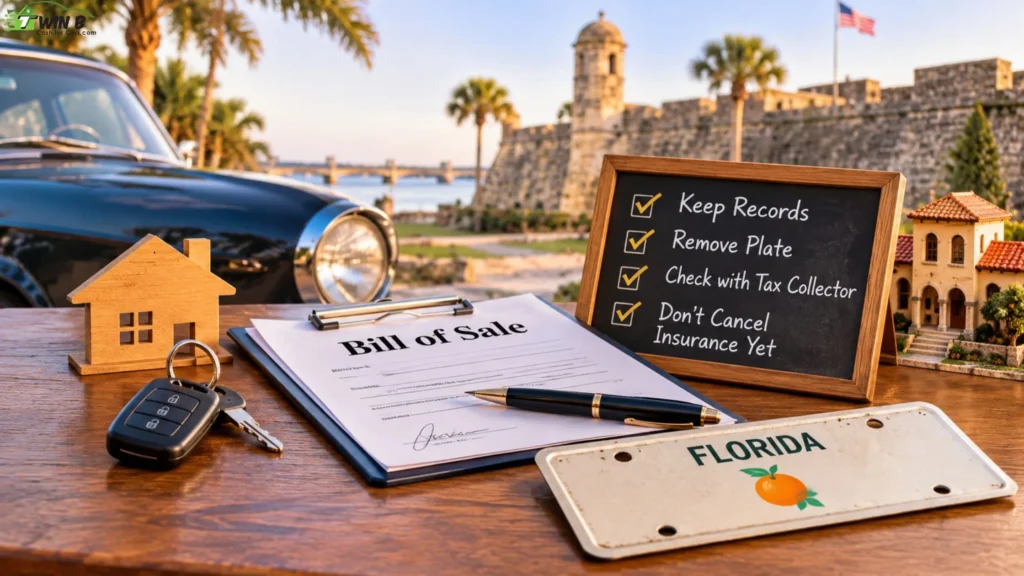
Keep records of the sale. Remove the license plate, since in Florida the plate stays with the owner, and ask the tax collector how to handle the Notice of Sale (HSMV 82050) when an estate is the seller. Our Notice of Sale guide covers the basics. Don’t cancel insurance until the sale is done.
Where to Go Next
Learn about cash for cars in St. Augustine or junk car removal in St. Augustine. Nearby: St. Johns County, Ponte Vedra Beach, and Nocatee.
Find Out What the Car Is Worth
You don’t have to decide before you know the numbers. Tell us about the car, and we’ll explain what we can offer and what we’d need from you. No price is guaranteed until the car’s condition and documents are confirmed. Request your quote here.
Frequently Asked Questions
What can I do with an inherited car?
Common options are keeping it, selling it, donating it, or recycling it. The right choice depends on condition, cost, and paperwork.
Do I need the title to sell an inherited car?
Usually you need to show ownership or authority, which may involve estate steps. Confirm with a professional.
Is an old inherited car worth anything?
Even older cars can have value from parts and metal. A vehicle-specific quote is the best way to find out.
Should I pay for repairs or storage first?
Compare ongoing costs with a likely sale value. Ask for a quote before spending money.