


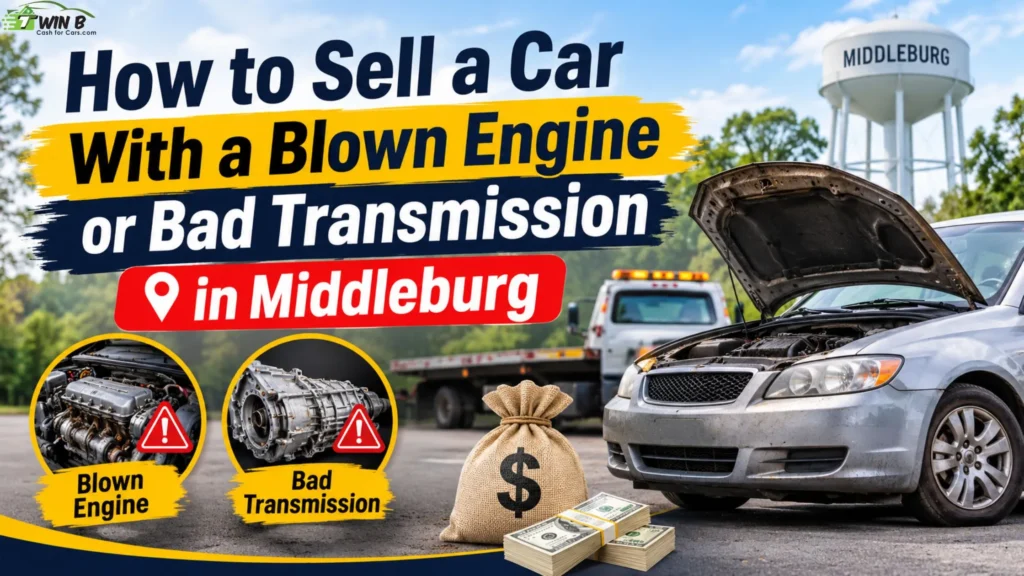
Yes, you can sell a car with a blown engine or a bad transmission in Middleburg. Many buyers purchase cars with major mechanical failure, valuing the body, usable parts, and recyclable metal. The offer depends on condition, so describe the problem accurately, compare quotes, and confirm towing before you agree to anything.
Can I Sell a Car With a Blown Engine?
You can. A dead engine or failed transmission lowers the price, but it doesn’t make the car worthless. Buyers look at the make and model, the condition of the body and interior, which parts are still good, and the weight of the metal. No one can promise a price without seeing the details, so be wary of anyone who quotes a firm number without asking about the car.
Do I Need to Fix the Transmission Before Selling?
Usually not. Engine and transmission repairs are among the most expensive a car can need, and the cost often runs higher than the value they add. Before you spend anything, get a repair estimate and a cash quote and compare them. If you’re unsure which way to lean, our guide on whether to repair or sell an old car in Fleming Island walks through a simple decision checklist.
How to Sell a Non-Running Car in 5 Steps
1. Describe the problem honestly
Say what failed and what you’ve noticed. The more accurate the description, the less likely the offer will change at pickup.
2. Photograph the car
Take clear photos of all sides, the interior, the odometer, the dashboard (including any warning lights), and any damage. Buyers use them to give a more accurate quote.
3. Get a quote, and compare
Ask for quotes from more than one buyer. Ask how the number was calculated, and whether it can change at pickup. Get the terms in writing or by text so you have a record.
4. Arrange the tow
A car that can’t move needs a tow. Many buyers include towing, but terms vary, so ask before scheduling:
- Is towing included, or deducted from the offer?
- Is there any access or location fee?
- Can they pick up from a long driveway, an unpaved lot, or behind a gate? Tell them in advance.
5. Finish the paperwork
Have the title ready, or know where it is, and settle any loan first. Then complete the Florida seller steps below.
What Should I Tell the Buyer? A Checklist
Have this ready when you ask for a quote:
- Year, make, model, and trim
- Mileage (approximate is fine if the odometer isn’t readable)
- What failed, and when
- Whether it starts, turns over, or moves under its own power
- Warning lights, noises, leaks, or smoke you noticed
- Any other damage (body, flood, accident)
- Whether you have the title, and whether a lender holds it
- Where the car is parked and any access issues
- Whether the keys are available
What Florida Paperwork Do I Need?
In Florida, the license plate stays with the seller. You must remove it, and you may then transfer it to another vehicle. You’ll also need to sign over the title and file a Notice of Sale, either on the back of the title or on form HSMV 82050, within 30 days of the sale. If your title is electronic, you and the buyer may need to visit a motor vehicle service center to complete the transfer. Confirm current forms and steps with the Florida Department of Highway Safety and Motor Vehicles (FLHSMV), since requirements can change.
Will the Buyer Tow a Car That Can’t Move?
Many do, but terms vary. Confirm in writing whether towing is included and whether there’s any access or location fee before you schedule. A trustworthy buyer will explain this up front.
Where to Go Next
Learn about cash for cars in Middleburg, cash for damaged cars in Middleburg, or junk car removal in Middleburg. If you’re in Jacksonville, see our guide to selling a non-running car.
Nearby: Green Cove Springs, Fleming Island, and Orange Park.
Get a Quote for Your Non-Running Car
Have your details and photos ready, and you can see what your car could bring in a few minutes. Request a free quote here. No price is guaranteed until the car’s condition is confirmed.
Frequently Asked Questions
Can I sell a car with a blown engine?
Yes. Buyers often purchase cars with major mechanical failure, valuing the body, parts, and recyclable metal.
Do I need to fix the transmission before selling?
Usually not. Repair cost is often higher than the value it adds, so compare a repair estimate with a quote first.
How should I describe the problem to a buyer?
Be specific: when it failed, any warning lights or noises, and whether it starts or moves. Accurate details help avoid a changed offer at pickup.
Will the buyer tow a car that cannot move?
Many do, but terms vary. Confirm towing is included and whether there is any access or location fee before scheduling.