


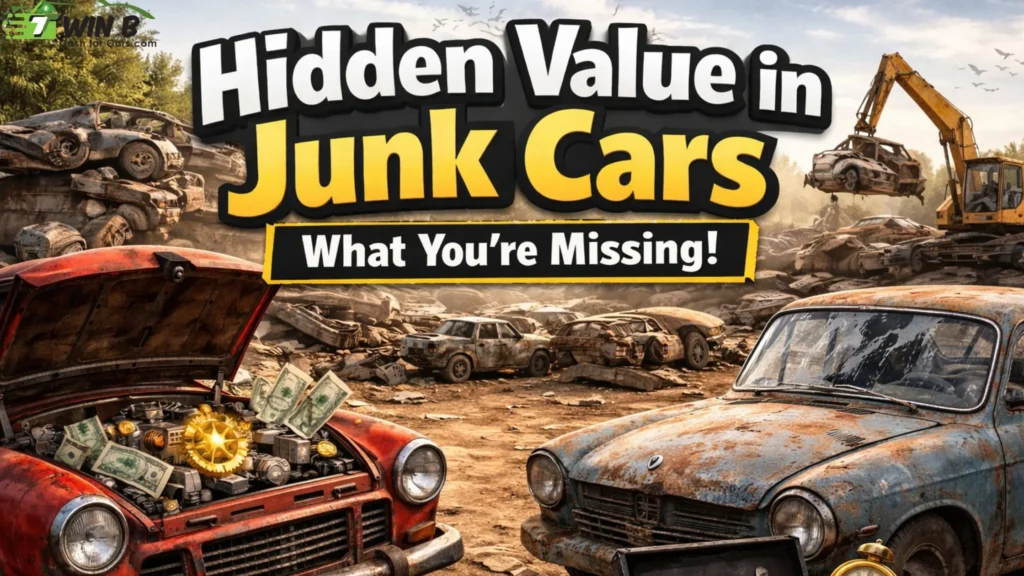
Most people look at an old, damaged, or non-running car and see only one thing — a problem. It takes up space, costs money to repair, and feels impossible to sell. But what if that “junk” car is actually holding untapped money?
The truth is, there is significant hidden value junk cars owners often overlook. What seems like a useless vehicle can still generate real cash — sometimes more than expected — if you understand where that value comes from and how to unlock it.
If you’ve been delaying the decision to sell, this guide will change how you see your vehicle.
Why Junk Cars Are More Valuable Than You Think
A car doesn’t lose all its worth just because it stops running. In fact, many parts inside your vehicle still carry strong resale and recycling value.
Engines, transmissions, batteries, catalytic converters, and even small electronic components can be reused or resold. On top of that, the metal itself has scrap value, which fluctuates based on market demand.
This is where the real hidden value junk cars concept comes into play — your vehicle isn’t one product, it’s a collection of valuable components.
If you haven’t checked what your car is worth recently, you might be underestimating its actual market price. Getting a quick quote today could instantly reveal value you didn’t know existed.
The Role of Market Demand in Junk Car Values
One of the biggest factors affecting junk car values is demand. Certain car models have parts that are in higher demand, especially if they are commonly used vehicles.
For example, engines or transmissions from popular models can fetch higher prices because they are easier to resell. Similarly, rising scrap metal prices can increase the base value of your car overnight.
This means the value of your junk car is not fixed — it changes with the market.
If you wait too long, you could miss the best time to sell. On the other hand, acting at the right moment can help you maximize returns without any extra effort.
That’s why checking your vehicle’s value now, rather than later, is always a smart move.
Why Local Buyers Unlock More Hidden Value
Not all buyers see the same value in your car. Large national platforms often provide standard quotes, but local buyers tend to look deeper.
Local professionals understand which parts are in demand in your area. They often have direct connections with recyclers and auto shops, allowing them to extract more value from each vehicle.
Because of this, they can offer better deals compared to generalized pricing systems.
If your goal is to truly benefit from the hidden value junk cars offer, working with a local expert can make a noticeable difference in your final payout.
Even a single quote from a trusted local buyer can give you a clearer idea of what your car is really worth.
Condition Isn’t Everything
Many car owners assume that a non-running or heavily damaged vehicle has no value. This is one of the biggest misconceptions.
In reality, buyers don’t just evaluate whether the car runs — they assess what can still be used. A car with engine failure may still have valuable interior parts. A damaged exterior doesn’t affect metal weight or certain components.
This is why you can still receive strong offers even if your car seems beyond repair.
Instead of focusing on what’s broken, it’s smarter to focus on what still holds value — and let professionals evaluate it properly.
Free Towing Adds to Your Profit
Another hidden benefit many sellers overlook is the impact of free towing. If your car doesn’t run, transporting it yourself can cost a significant amount.
Reliable buyers include towing at no cost, which means you don’t lose money just to complete the sale.
This directly increases your final payout.
When evaluating offers, always consider the full picture — not just the price, but also the services included. A slightly higher offer with hidden fees can actually leave you with less money than a transparent deal with free towing included.
Timing Can Increase Your Car’s Value
Yes, timing matters — even for junk cars.
Metal prices, demand for used parts, and local inventory shortages can all influence how much your vehicle is worth. Selling at the right time can increase your profit without any additional effort.
If your car has been sitting unused for months, it might already be losing value. Acting now instead of waiting can help you capture the best possible return.
Sometimes, the biggest loss isn’t selling too cheap — it’s waiting too long.
Stop Letting Your Junk Car Lose Value
Every day your car sits unused, it continues to depreciate. Weather damage, rust, and component wear reduce its potential worth over time.
What feels like “no rush” can quietly turn into lost money.
If you’re serious about unlocking the hidden value junk cars hold, taking action sooner rather than later is key.
Even if you’re unsure about selling, getting a quote costs nothing — but it can give you valuable insight into your car’s real worth.
Final Thoughts: Turn What You Ignore Into Instant Cash
Your junk car isn’t just sitting there—it’s quietly holding value you haven’t unlocked yet. The gap between a low offer and real profit comes down to timing, awareness, and choosing the right buyer who understands the true hidden value junk cars carry. Once you see your vehicle as a collection of valuable parts and materials—not just a broken car—you start making smarter, more profitable decisions. If you’ve been ignoring that old vehicle thinking it’s worthless, this is your moment to change that mindset and turn it into something meaningful.
Why let it lose value day by day when you can convert it into instant cash today? Take a minute to get a quick, no-obligation quote from a trusted local service like Twin B Cash for Cars and see what your car is really worth right now.
Compare your options, pick a reliable buyer, and enjoy a smooth, stress-free process with fast payment and zero hassle. The sooner you act, the more you gain—and the less you leave behind. Don’t let that hidden value fade away. Unlock it, claim your cash, and let your car deliver one final return—this time, directly into your pocket.