


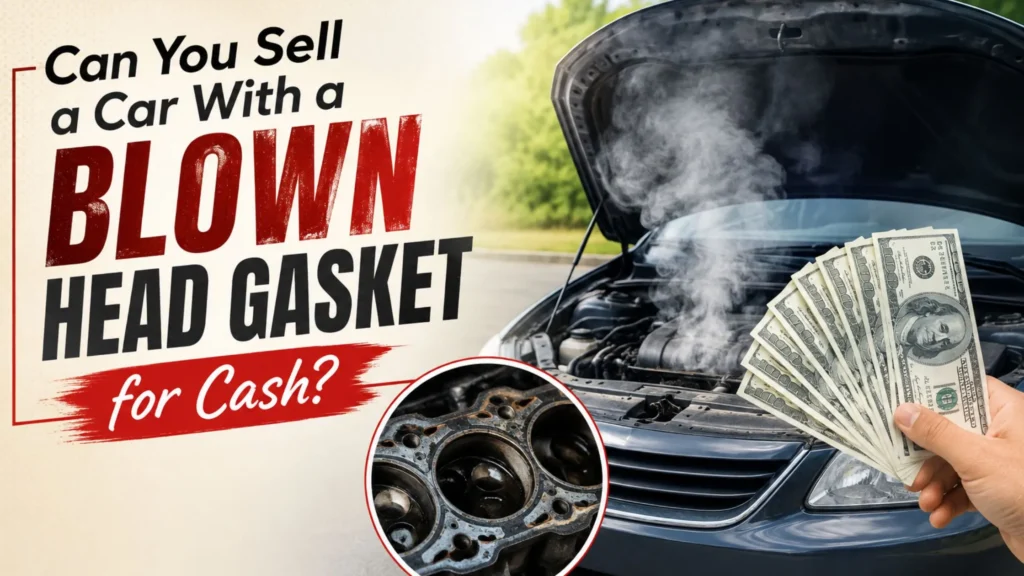
A blown head gasket can be one of the more serious engine problems a vehicle can experience. Repairing it may require extensive labor and additional engine work. If you’re trying to sell car with blown head gasket, you don’t necessarily have to repair the vehicle before exploring your options.
The vehicle may still have value because of its components, materials, and overall condition.
What Does a Head Gasket Do?
The head gasket sits between the engine block and cylinder head. It helps maintain proper separation between engine oil, coolant, and combustion gases.
When the gasket fails, these systems can interfere with each other. This can cause overheating, coolant loss, white exhaust smoke, poor engine performance, or contaminated engine oil.
Ignoring the problem can result in additional engine damage.
Why Is a Blown Head Gasket a Serious Problem?
Repairing a head gasket often involves significant labor because technicians may need to remove major engine components to access the gasket.
In some cases, the engine head may also require inspection or machining. If overheating has caused additional damage, the total repair cost can increase further.
For an older vehicle, this can make repair financially difficult to justify.
Should You Repair the Vehicle Before Selling?
Consider the vehicle’s overall financial picture.
Look at:
- Repair estimate
- Vehicle age
- Mileage
- Current condition
- Other mechanical problems
- Exterior condition
- Expected resale value
If the car already has multiple expensive problems, putting more money into the engine may not provide a worthwhile return.
Read more: Top Reasons to Sell Your Unwanted Car for Cash in Ponte Vedra
Can a Broken Engine Car Still Have Value?
Absolutely.
A vehicle with a serious engine problem may still contain valuable components. Depending on the vehicle, usable doors, wheels, electronics, interior components, catalytic components, transmission, and other parts may have value.
The vehicle may also contain recyclable materials.
This means an engine failure does not automatically mean the car has no value.
How Should You Describe the Car?
Transparency is important when selling a damaged vehicle.
Tell the buyer about the blown head gasket and any symptoms you have noticed. Mention whether the vehicle starts, whether it overheats, and whether it can be driven.
Providing accurate information helps the buyer assess the vehicle and reduces misunderstandings during the selling process.
What If the Car Cannot Be Driven?
A vehicle with a serious engine problem may need to be transported rather than driven.
When comparing buyers, check whether towing is included. Twin B Cash for Cars advertises free towing with vehicle purchases, which can make selling a non-running vehicle easier.
Sell a Damaged Vehicle Without Making Major Repairs
Owners do not always need to restore a damaged car before selling it. A buyer may evaluate the vehicle based on its current condition.
Twin B Cash for Cars specifically lists damaged-car buying among its services and states that it purchases wrecked, totaled, and non-running vehicles.
This can be useful when the cost of restoring an older vehicle is higher than the value you expect to recover.
Conclusion
A blown head gasket can make a vehicle expensive to repair, but it does not necessarily eliminate its value. Before spending money on a major engine repair, consider the car’s age, condition, repair estimate, and potential selling value.
Selling the vehicle as-is may provide a practical alternative and save you from taking on an expensive repair project.
Have a vehicle with a blown head gasket? Contact Twin B Cash for Cars for a free quote and find out what your damaged vehicle may be worth.