


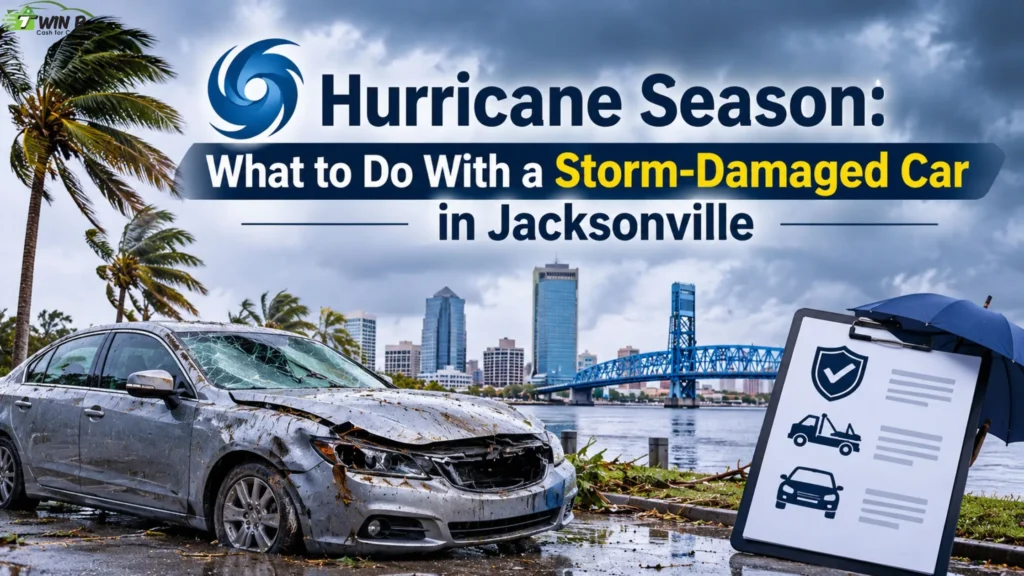
If a storm damaged your car in Jacksonville, put safety first, then photograph the damage and call your insurer before you move, repair, or sell anything. Don’t start a car that took on floodwater. Once your claim is underway, you can compare repair, sale, and removal options.
This is general information, not legal, insurance, or financial advice. Check your own policy and the official sources linked below.
What should I do first with a storm-damaged car?
Work through these in order.
- Check that the area is safe. Stay clear of downed power lines, standing water, and fallen trees. A car in floodwater can hide hazards you can’t see, so wait until local officials say it’s safe to go back.
- Don’t start it if it flooded. If water reached the floorboards or the seats are wet, leave the key alone. Trying to start a flooded engine can turn a repairable problem into a much bigger one.
- Take photos and video before anything moves. Capture the car from every side, the waterline if there is one, the interior, the odometer, and the surroundings (a fallen tree, a flooded lot, a broken window). Note the date and time.
- Call your insurer. Ask what your policy covers, how to file, and whether they want the car towed to a specific place. Write down the claim number and who you spoke with.
- Protect the car from further damage. If it’s safe, cover broken windows and keep rain out. Keep every receipt for towing, temporary repairs, or storage.
- Don’t sign or sell anything yet. Hold off on repair authorizations and sale paperwork until you know what your insurer will do.
Does my insurance cover hurricane or flood damage to my car?
Often, but only if you carry the right coverage. In Florida, storm damage like wind, falling objects, and flooding generally falls under comprehensive (also called “other than collision”) coverage, which is optional. Liability-only policies typically don’t pay for damage to your own car.
Read your policy or ask your agent. Also ask whether your deductible applies and whether rental reimbursement is included.
If your car is financed or leased, you may still owe the loan balance even if the car is totaled, so contact your lender too.
Can I sell a car damaged in a hurricane?
Yes. Some buyers purchase storm-damaged and flood-damaged vehicles, running or not. But a few things affect the offer and the process:
- Condition: water in the engine bay, a flooded interior, tree damage, or a cracked frame all change the value.
- Title status: a clean title in your name is simplest. A lien means the lender gets paid first.
- Insurance status: this one matters most, and it’s covered next.
Should I wait for the adjuster before selling?
Usually, yes. Selling too early can complicate your claim, because the insurer may need to inspect the car or document the loss.
If your insurer declares the car a total loss, Florida has title rules for that situation. Under state procedures, an owner or insurer generally can’t dispose of a total-loss vehicle until it has obtained a salvage certificate of title or a certificate of destruction from the Florida Highway Safety and Motor Vehicles (FLHSMV). Those rules have been revised in recent years, so check the current FLHSMV guidance before you hand over a vehicle:
- FLHSMV Procedure TL-36: Total Loss Settlements Involving Insurance Companies
- Florida Statutes, Section 319.30
If you have a flood-damaged car and aren’t sure how the title will be handled, ask your insurer and FLHSMV before you sign anything.
Repair, sell, or remove: which makes sense?
- Repair may make sense for light damage, a low deductible, and a car you plan to keep.
- Total loss is declared by your insurer, who may pay you and take the car.
- Sell for cash can fit when the repair cost is more than the car is worth, you don’t have comprehensive coverage, or you just want it gone. See cash for damaged cars in Jacksonville and cash for cars in Jacksonville.
- Junk removal works for a car that’s beyond saving. See junk car removal in Jacksonville.
How fast can a storm-damaged car be removed?
It depends on the buyer’s schedule and how many people need help. After a major storm, towing and removal schedules can fill up quickly, and roads and neighborhoods may be hard to reach.
Nobody can promise a specific pickup time after a storm. Ask about availability up front, and have your title, ID, and photos ready so paperwork doesn’t slow things down.
Before the storm: a Jacksonville car-prep block
Hurricane season runs June 1 through November 30. Jacksonville’s Emergency Preparedness Division publishes an annual guide at JaxReady.com, which also covers evacuation zones. Duval County’s low-lying and coastal areas are the most exposed, so find your zone before a storm is in the forecast.
Quick prep for your car:
- Photograph the car now (all sides, interior, odometer) so you have a “before” record.
- Keep your policy number and your insurer’s claims phone number somewhere offline and easy to find.
- Know where your title is, and keep a copy of your registration.
- Fill your gas tank before a storm approaches.
- If you can, park on higher ground, away from large trees and power lines.
- Don’t leave valuables or important documents in the car.
After the storm: a quick recap
- Wait for the all-clear.
- Photograph the damage.
- Don’t start a flooded car.
- Call your insurer.
- Keep receipts.
- Hold off on selling until your claim direction is clear.
- Then decide: repair, total-loss settlement, sale, or removal.
Serving Jacksonville and nearby communities
If you’re elsewhere in Northeast Florida, see our guides and service pages for selling a flood-damaged car in Jacksonville Beach, cash for cars in Jacksonville Beach, cash for cars in Orange Park, and cash for cars in Atlantic Beach.
Frequently asked questions
What should I do first with a storm-damaged car?
Prioritize safety, take photos, and contact your insurer before moving or repairing it. Keep any receipts.
Can I sell a car damaged in a hurricane?
Yes. Some buyers purchase storm-damaged vehicles, but condition and title status affect the offer.
Should I wait for the insurance adjuster before selling?
Often yes. Selling too early may complicate a claim, so ask your insurer first.
How fast can a storm-damaged car be removed?
Timing depends on demand and the buyer’s schedule. After major storms, schedules can be busy, so ask about availability.
Is it safe to start a car that was in floodwater?
Generally no. If water reached the floorboards or the interior is wet, starting it can cause more damage. Have it inspected first.
What if I don’t have comprehensive coverage?
Storm damage to your own car may not be covered, and repair or replacement costs fall on you. In that case, compare repair costs with what a buyer might offer for the vehicle as-is.
Will a flood-damaged car have a special title?
If an insurer declares it a total loss, Florida requires a salvage certificate of title or certificate of destruction before disposal. Check FLHSMV for current requirements.