

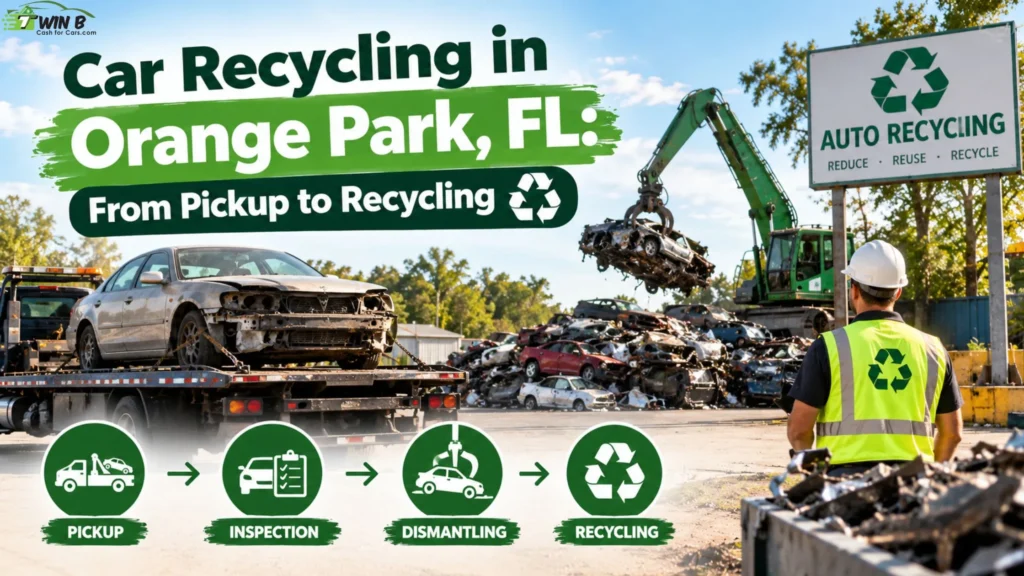
When an old car is recycled, it’s typically towed away, drained of fluids, stripped of reusable parts, and then crushed or shredded so its metals can be sorted and reused. It’s a more useful ending than a car left rusting in a yard, and most of a vehicle can be recovered.
If you’ve ever wondered where a car actually goes after it leaves your Orange Park driveway, here’s the usual journey.
Step 1: Pickup and towing
The process starts when a buyer arranges a tow. In Orange Park and across Clay County, that usually means a truck arriving at your home, workplace, or a storage lot. You sign the paperwork, hand over the keys if you have them, and the car is loaded. From that point, it’s the buyer’s responsibility.
Step 2: Depollution
Before anything else, a car has to be made safe to handle. This is called depollution, and it’s the most important environmental step. A typical car holds several fluids and components that shouldn’t end up in soil or water:
- Engine oil and transmission fluid
- Coolant (antifreeze)
- Brake fluid and power steering fluid
- Fuel
- Air conditioning refrigerant
- The battery
- Other components such as certain switches
These are drained or removed and handled according to the rules that apply to the operator. Florida’s water table is high and its waterways are a big part of life here, so proper handling of these materials matters.
Step 3: Parts recovery
Next, usable parts are pulled. Depending on the car’s condition and the demand for its model, that can include:
- Engines and transmissions
- Alternators and starters
- Doors, hoods, and body panels
- Wheels and tires
- Electronics and other components
Reusing parts keeps working components in circulation and often costs buyers less than new ones. This is one reason a car with plenty of good parts can be worth more than its scrap weight alone.
Step 4: Crushing and shredding
Once the valuable parts and hazardous materials are removed, the remaining shell is typically crushed and then shredded into small pieces. Large machinery breaks the body into fragments, making it easier to sort.
Step 5: Sorting the materials
The shredded material is separated into categories. Magnets pull out steel and iron, which make up most of a car. Other systems separate non-ferrous metals such as aluminum and copper. What remains, often plastics, foam, and fabrics, is handled separately, and how much of it is recovered can vary by facility.
Step 6: Back into manufacturing
Recovered metals are sold to mills and manufacturers, who melt them down and turn them into new products. Steel and aluminum can be recycled repeatedly without losing their basic properties, which is a large part of why car recycling is considered worthwhile.
Why it matters when you have an old car
Leaving an unwanted vehicle to sit has real downsides:
- Leaking fluids can contaminate the ground.
- Standing water in a dead car can attract mosquitoes.
- The car keeps losing value with every month of Florida sun and humidity.
- It may run into HOA or code enforcement issues.
Selling it for recycling solves several of these at once.
What you can do to help
- Tell the buyer about leaks, damage, or missing parts.
- Remove personal items and any toll transponder.
- Keep your paperwork and get a receipt or bill of sale.
- Confirm the buyer’s process and ask where the car goes.
For ownership and title requirements, check the Florida Highway Safety and Motor Vehicles (FLHSMV) website, and confirm what your buyer needs. Rules can change.
A note on "green" claims
Recycling processes vary by operator. If a company advertises environmental benefits, it’s fair to ask how they handle fluids and where materials go. A good buyer can explain it plainly.
Learn more about your options on our pages for junk car removal in Orange Park, cash for cars in Orange Park, and cash for damaged cars in Orange Park. We also cover Fleming Island and Oakleaf nearby.
Frequently asked questions
What types of vehicles can I sell in Orange Park?
Depending on the buyer, eligible vehicles may include old, damaged, junk, non-running, or unwanted cars, trucks, SUVs, and other vehicles.
Do you offer pickup in Orange Park?
Pickup availability depends on the business’s actual service area and schedule. Confirm that Orange Park is covered before booking.
What affects the value of my vehicle in Orange Park?
Year, make, model, mileage, condition, title status, parts, demand, and pickup logistics can affect a vehicle’s value.
What documents do I need to sell my car in Orange Park?
Requirements can vary by vehicle and situation. Confirm the current Florida ownership/title requirements and the buyer’s paperwork requirements before pickup.
Have an old car to recycle? Get a Free Car Valuation, Request a Quote, or Call Now.