


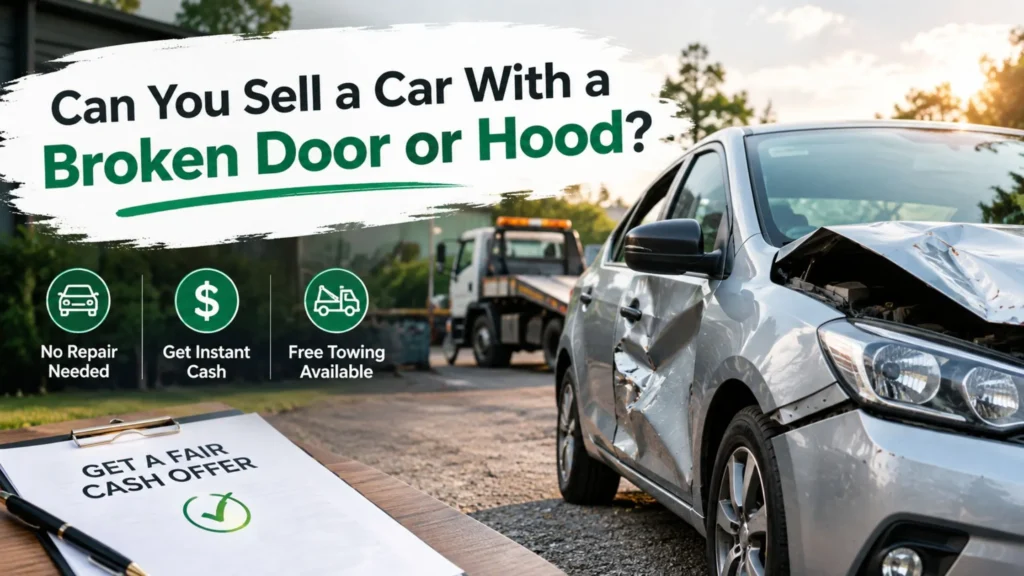
A broken door or damaged hood can make an otherwise usable vehicle difficult to sell through a traditional buyer. Problems such as a door that will not close properly, a bent hood, damaged hinges, or collision-related body damage can make potential buyers question the vehicle’s safety and repair costs. If you need to sell car with body damage, you may have options without restoring the vehicle first.
Common Causes of Door and Hood Damage
Body damage can happen in many ways. A minor collision may bend a door or hood, while a larger accident can affect several panels at once.
Other causes include falling objects, weather-related damage, parking-lot incidents, or repeated wear on older vehicles. In some cases, the damage may be mostly cosmetic. In others, it can interfere with visibility, access, or the ability to close a panel correctly.
Understanding the source and severity of the damage can help you determine what selling route makes the most sense.
Does a Broken Door Make a Car Harder to Sell?
A broken car door can create practical concerns for buyers. If the door does not open, close, lock, or align correctly, repairing it may require replacement parts and labor.
Private buyers often prefer vehicles that need little immediate work. When they see a damaged door, they may negotiate aggressively or decide not to inspect the vehicle at all.
That does not necessarily mean the vehicle has no value. The car may still contain usable mechanical components and other parts that contribute to its overall worth.
What About a Damaged Hood?
A damaged hood can range from a few dents to severe collision damage. A hood that is difficult to open or close may also create concerns about access to the engine compartment.
If the hood has been badly bent, replacing it may involve more than simply installing another panel. Paint matching, hinges, latches, alignment, and related components can increase the final repair bill.
Before paying for those repairs, consider whether the investment is justified by the vehicle’s age and overall condition.
You May Not Need to Repair the Vehicle First
One of the biggest decisions is whether to fix the damage before selling. For an older vehicle with several existing problems, repairing one body panel may not significantly increase the amount you can ultimately receive.
Consider the full picture instead of focusing on the damaged door or hood alone.
If the vehicle also has high mileage, mechanical issues, worn tires, electrical faults, or other problems, putting money into cosmetic repairs may not be the most practical choice.
Selling a Vehicle in Its Current Condition
Choosing to sell vehicle as is can eliminate the need to prepare the car for a traditional private sale. Instead of repairing the body, paying for detailing, photographing the vehicle, creating listings, and waiting for potential buyers, you can first explore what the car may be worth in its current state.
An evaluation may take into account the vehicle’s make, model, year, mileage, overall condition, damage, and potential usable parts.
This approach can be particularly useful when the cost and effort required to restore the vehicle are greater than you want to take on.
What Information Can Help With an Evaluation?
When discussing your vehicle with a potential buyer, provide accurate details about its condition.
You may want to mention:
- The year, make, and model
- Current mileage
- Which door or hood is damaged
- Whether the affected part opens and closes
- Any accident history you know about
- Mechanical problems
- Whether the vehicle starts and runs
- Title and ownership information
- Your vehicle’s current location
Clear information helps establish realistic expectations before arrangements are made.
Look at the Vehicle as a Whole
Body damage should not be considered separately from the rest of the car. A vehicle with a damaged door but a strong engine may have a different value from an older car with body damage and several mechanical problems.
Likewise, a newer vehicle with significant accident damage may still have valuable components.
Instead of assuming the car is either worthless or worth repairing, compare both possibilities. Finding out what the vehicle may be worth in its current condition gives you another point of reference.
Jacksonville Car Owners Can Consider Cash-Selling Options
Jacksonville vehicle owners dealing with unwanted damaged cars do not necessarily have to rely on private buyers. A company that purchases damaged vehicles may provide an alternative for owners who want to avoid extensive preparation.
Twin B Cash for Cars can help vehicle owners explore the possibility of selling cars with different types of damage. Providing basic information about the vehicle and its condition can help you determine whether an as-is sale is worth considering.
FAQs
Can I sell a car if the door is broken?
Yes. A vehicle with a broken door may still have value depending on its overall condition, age, model, mileage, and other factors.
Should I replace a damaged hood before selling?
Not always. Compare the repair cost with the potential increase in the vehicle’s selling value before spending money on replacement parts.
Does body damage significantly reduce car value?
It can, particularly when the damage affects functionality or is connected to a major accident. However, other vehicle factors also influence value.
Can I sell a damaged car without repairing it?
In many situations, yes. Buyers that handle damaged vehicles may evaluate the car in its existing condition.
Conclusion
A broken door or damaged hood can make a traditional car sale more challenging, but it does not automatically make the vehicle worthless. Before spending money on bodywork, consider the vehicle’s overall condition and whether the expected return justifies the repair expense.
For owners who prefer a simpler solution, selling the car in its current condition can be worth exploring.
Find Out What You Can Do With the Damaged Vehicle
A damaged door or hood does not have to leave your car sitting unused. Twin B Cash for Cars can help you explore your options based on the vehicle’s actual condition. Provide the relevant vehicle details and damage information to see whether selling the car as-is could be a practical way to move on from it.