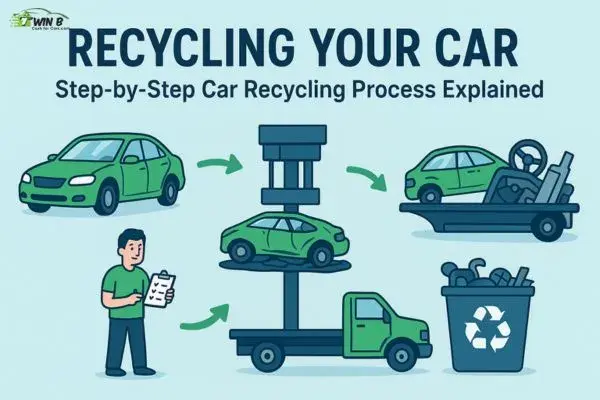


Every vehicle has a lifecycle. When a car gets old, damaged beyond repair, or simply becomes unwanted, it doesn’t have to end up rusting away or polluting the environment. Instead — through a proper car recycling process — an old car can be transformed into valuable materials and spare parts, giving it a second life while benefiting you financially.
If you’ve been searching for scrap car recycling near me, you likely want to understand how the process works — and what to expect. In this post, we’ll guide you step by step through the car recycling process, explain why it matters, and show how a service like Twin B Cash for Cars makes it easy, quick, and eco-friendly.
Why Recycling Cars Matters: Environmental + Economic Benefits
Before diving into the steps, it’s worth understanding why recycling cars is important — both for you and for society.
- Waste reduction & resource conservation: A properly recycled car yields a large portion of materials — especially metals — that can be reused. Instead of letting those metals sit in a landfill, they’re recovered and fed back into manufacturing.
- Reduced environmental pollution: Cars contain hazardous fluids (oil, coolant, brake fluid, etc.) and components (batteries, toxins) that, if not handled correctly, can leak and damage soil, water, and air. The recycling process ensures safe fluid disposal.
- Economic value: Even a car that no longer runs has value — in its metal, parts, and scrap. Many components can be refurbished or resold, creating income for you and for recyclers.
- Support circular economy: Recycling cars reduces demand for new raw materials, aligning with broader efforts toward sustainability and waste minimization.
So when you choose to recycle your old car — especially through a transparent service that handles towing and recycling — you’re not just earning cash, you’re contributing to a cleaner, greener world.
Step-by-Step: How the Car Recycling Process Works
Here’s a typical workflow followed by professional recyclers to process end-of-life vehicles, ensuring environmental compliance and maximum material recovery.
1. Vehicle Evaluation and Collection
The first step begins before dismantling. The recycler (or cash-for-cars service) evaluates the vehicle: its make, model, age, overall condition, and whether any parts are still salvageable. Based on this evaluation, they decide whether the car should be refurbished (if possible) or fully recycled.
For owners, this means providing accurate information about the vehicle’s condition. Services like Twin B Cash for Cars often allow selling cars in any condition — old, damaged, non-running, even without title.
Once accepted, the car is collected — often with free towing and same-day pickup. That means you don’t need to worry about arranging transportation.
2. De-pollution: Draining Fluids & Removing Hazardous Materials
Before any dismantling, the car must be “de-polluted.” This involves draining all hazardous fluids safely — oil, transmission fluid, brake fluid, coolant, refrigerants, fuel, etc. These are handled carefully to avoid environmental contamination.
Used fluids may be recycled or treated according to environmental standards. Similarly, batteries and other hazardous components (like airbags, certain plastics, electronic parts) are removed and disposed or recycled properly. This step protects soil, water, and air from pollution.
3. Dismantling and Salvaging Usable Parts
Once it’s safe, the car is dismantled systematically. Technicians remove components that still have value: engines (if salvageable), transmission units, catalytic converters, tires, rims, electronics, doors, windows, maybe even interior parts — depending on condition.
These salvaged parts can be refurbished and sold as used parts — often preferred by buyers seeking affordable alternatives to brand-new parts. This reuse not only extends the life of parts but also reduces the demand for manufacturing new ones.
For car owners, this means you may get more value for the car when parts are still usable — and recyclers get more material to re-market, making the recycling process economically viable.
4. Shredding and Metal Recovery
After removing all usable parts, the remaining “shell” of the car — mostly metals — goes to shredding. Industrial shredders break down the car body into small metal pieces. Magnets and sensors are used to separate different types of metals (steel, aluminum, copper, etc.) and separate non-metal materials (plastic, glass, rubber).
Recovered metals are then sent to steel mills or metal recycling facilities to be melted and reused — forming raw material for new products. This metal-recovery step recovers potentially up to 95% of a car’s weight according to recycling standards, making car-recycling among the most efficient waste-recovery processes.
Any leftover residues (non-metal parts, plastics not worth recycling, upholstery, glass) are disposed of responsibly — sometimes recycled, other times disposed under environmental guidelines.
5. Documentation & Legal/Environmental Compliance
A critical yet often overlooked part of the car recycling process is compliance. For unscrapped vehicles, it’s essential to complete paperwork: ownership transfer, deregistration (as per local regulations), and ensuring the recycler is compliant with environmental and disposal norms.
Although specifics vary by locality and law, reputable recyclers typically handle documentation for you — especially services advertised for “junk car removal” or “cash for cars.” For example, your own website highlights free towing and eco-friendly disposal.
If you’re searching for “scrap car recycling near me”, always ensure the facility you choose is legitimate, licensed, and follows environmental standards — both for safety and legality.
How a Cash-for-Cars Service Simplifies the Process for You
Understanding the process gives clarity — but for most car owners, the process feels overwhelming. That’s where services like Twin B Cash for Cars come into play. Here’s how they simplify everything:
- Any Condition Accepted: Whether the car is crashed, rusted, old, non-running, or missing title — they accept it.
- Free Towing & Pickup: You don’t need to arrange transport. The service collects the car at your convenience.
- Instant Quote & Same-Day Cash: Get a quote quickly, accept offer, hand over keys — you get paid on the spot.
- Eco-Friendly Disposal: They commit to recycling the vehicle responsibly — draining fluids, salvaging parts, shredding metal, minimizing waste.
- Hassle-free: No need to source scrapyards, handle paperwork, coordinate transport. Everything is handled. This convenience makes car recycling accessible for end-users.
If you’ve been searching “scrap car recycling near me” and came across Twin B’s site, this is exactly the value they provide: a seamless way to turn an unwanted car into cash — while doing your bit for the environment.
What to Do Before Handing Over Your Car for Recycling / Sale
To ensure you get the best value and avoid surprises, here are some things you should do before selling or recycling your car:
- Remove personal items & documents: Clear out all personal belongings, paperwork, electronics, extras. Recyclers usually don’t take responsibility for items left inside. A clean car helps avoid disputes.
- Confirm vehicle details: Provide accurate information about make, model, year, condition (running or not), and title status. This helps in accurate quote generation.
- Ensure paperwork is ready: While some services accept cars without title, having registration, RC or other proof helps smooth the process — especially when legal transfer is required.
- Ask about environmental compliance: If you care about sustainability, check if the recycler drains hazardous fluids, recycles metals properly, and disposes of non-recyclable waste responsibly.
- Get multiple quotes if possible: Even if you found a recycler through a “near me” search, getting quotes from more than one service ensures you get the best price.
Car Recycling: Myths vs. Reality
Because car recycling involves many steps and terminologies, there are common myths — here’s the reality:
Why “Car Recycling Process” is a Smart Choice — And Why “Scrap Car Recycling Near Me” Should Matter to You
Using the correct phrases when someone searches online is not only helpful for you as a buyer — it’s also important for search engine visibility. When people look for “car recycling process,” they want to understand how it works. When they search “scrap car recycling near me,” they are ready to act.
By combining both keywords in your content — explaining the process clearly and showing you offer a local recycling solution — you:
- Attract readers who are educating themselves (top of funnel)
- Capture customers who are ready to take action (bottom of funnel)
- Provide value, build trust, and increase chances they choose your service
Because your website (Twin B Cash for Cars) already offers free towing, instant quotes and eco-friendly disposal, a blog like this helps demonstrate authority and improve SEO for relevant searches.
How to Get Started with Twin B Cash for Cars — Step by Step
If you’re ready to recycle your car, here’s how you can do it with Twin B Cash for Cars:
- Visit the website or call the number (as given on site) to get an instant quote; provide details about your vehicle.
- Accept the offer — no obligation, fair pricing.
- Schedule a convenient pickup — free towing is included, you don’t need to arrange transport.
- Hand over keys + documents (if required); get paid on the spot.
- Let the professionals handle the recycling process — draining fluids, salvaging parts, shredding metal, and ensuring eco-friendly disposal.
In this way, you get hassle-free cash, clear your space, and help the environment — all with minimal effort.
Conclusion: Transform Old Cars into Value with a Proper Car Recycling Process
Recycling an old or damaged car is more than just getting rid of junk — it’s about converting waste into resource, helping the environment, and earning cash. The car recycling process — from evaluation to shredding and material recovery — is a well-defined path to achieve this.
If you’re searching for scrap car recycling near me, choosing a transparent, reliable service like Twin B Cash for Cars ensures convenience, fair payment, and eco-friendly disposal. You don’t need to worry about towing, paperwork, or the complexities of dismantling or recycling.
So instead of letting that unused car take up space — reclaim value, help conserve resources, and contribute to a cleaner planet.